How to check a courier's COD payment, parcel by parcel
A courier's payment is right only when every parcel on their sheet is yours, was collected at the right amount and charged at your rate — and the bank shows the difference. Here is how to check it, with a worked example.
Alevate Books · 20 Oct 2026 · 3 min read
When a courier pays you for cash on delivery, the transfer in your bank is one number. Behind it are dozens or hundreds of parcels. The payment is right only when every parcel on the courier's sheet is yours, was collected at the right amount, and was charged at your agreed rate — and the money in the bank equals what the parcels add up to.
What the courier sends you
Most couriers send two things: a settlement sheet and a bank transfer. The sheet lists each parcel in the payment, usually with:
- the tracking number
- the amount collected from the customer
- the courier's charge for that parcel
- the status: delivered or returned
The transfer is what is left after their charges come off. On its own it tells you nothing about which parcels it covers.
The four checks
- Every tracking number is one of your parcels. A parcel you do not recognise is a question for the courier before you accept the payment.
- The amount collected matches the order. If a Rs 7,240 order shows Rs 7,000 collected, the Rs 240 is missing from this payment.
- The charge matches your rate. Check delivered and returned parcels against the rates in your agreement.
- The bank amount equals collected minus charges. Add up what was collected, take off the charges and any tax shown on them, and compare with what actually arrived.
A worked example
Here is a settlement for six parcels from one courier, with an agreed charge of Rs 180 a parcel:
| Tracking | Collected | Charge | Status |
|---|---|---|---|
| TCS-778101 | Rs 7,240 | Rs 180 | Delivered |
| TCS-778102 | Rs 3,180 | Rs 180 | Delivered |
| TCS-778103 | Rs 4,990 | Rs 180 | Delivered |
| TCS-778104 | Rs 6,890 | Rs 180 | Delivered |
| TCS-778105 | Rs 0 | Rs 180 | Returned |
| TCS-778106 | Rs 8,990 | Rs 180 | Delivered |
| Total | Rs 31,290 | Rs 1,080 |
Collected Rs 31,290, less charges of Rs 1,080, is Rs 30,210. That is what the bank should show. The returned parcel still carries its Rs 180 charge — it was sent and brought back.
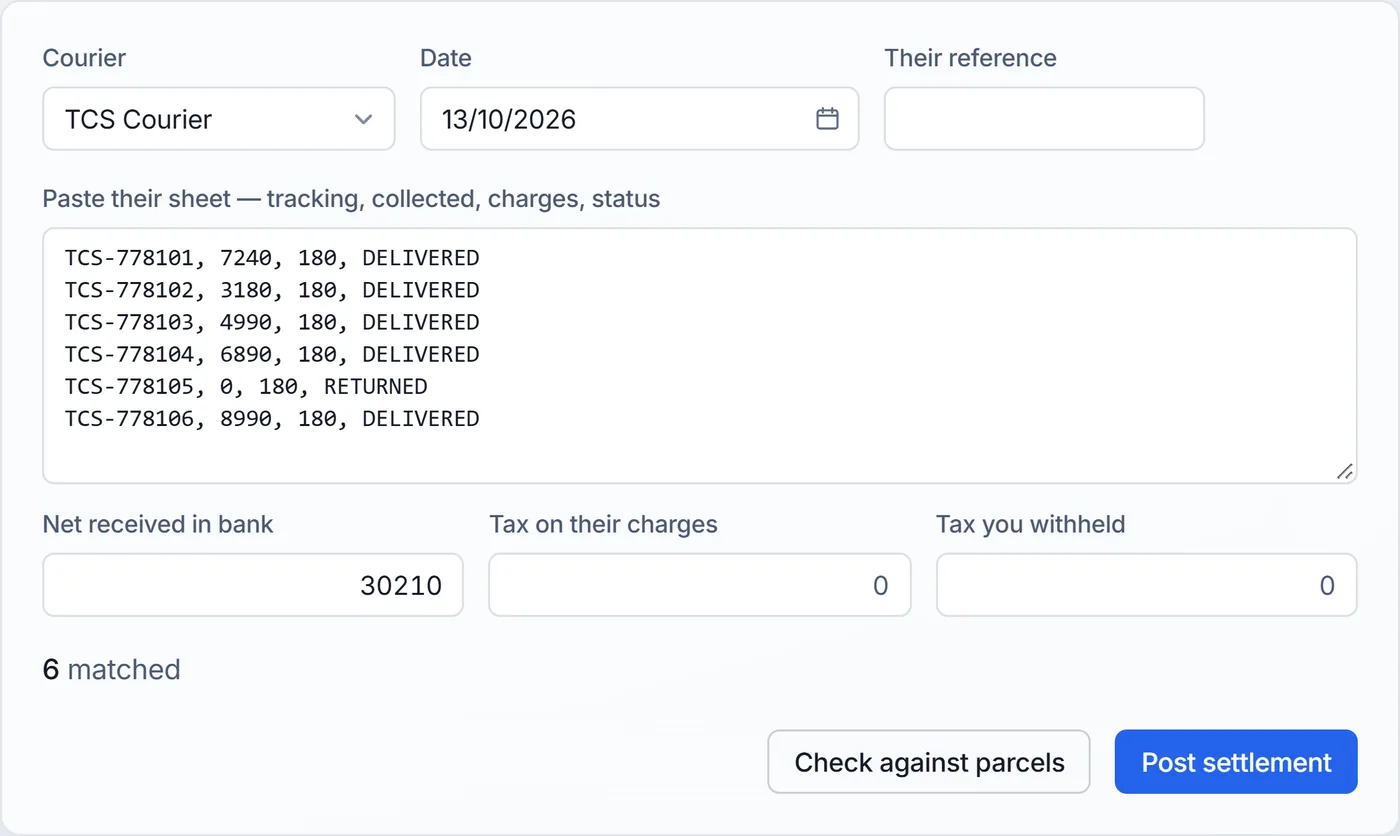
In Alevate Books you paste the courier's sheet as it comes — tracking, collected, charges, status — and enter what arrived in the bank. Each line is matched to one of your parcels by its tracking number, and the settlement is posted only when a person on your team approves it.
Know what is still with each courier
Between payments, the cash for delivered parcels sits with the couriers. For a COD brand this is often one of the biggest sums it owns, and it is easy to lose sight of across three or four couriers.
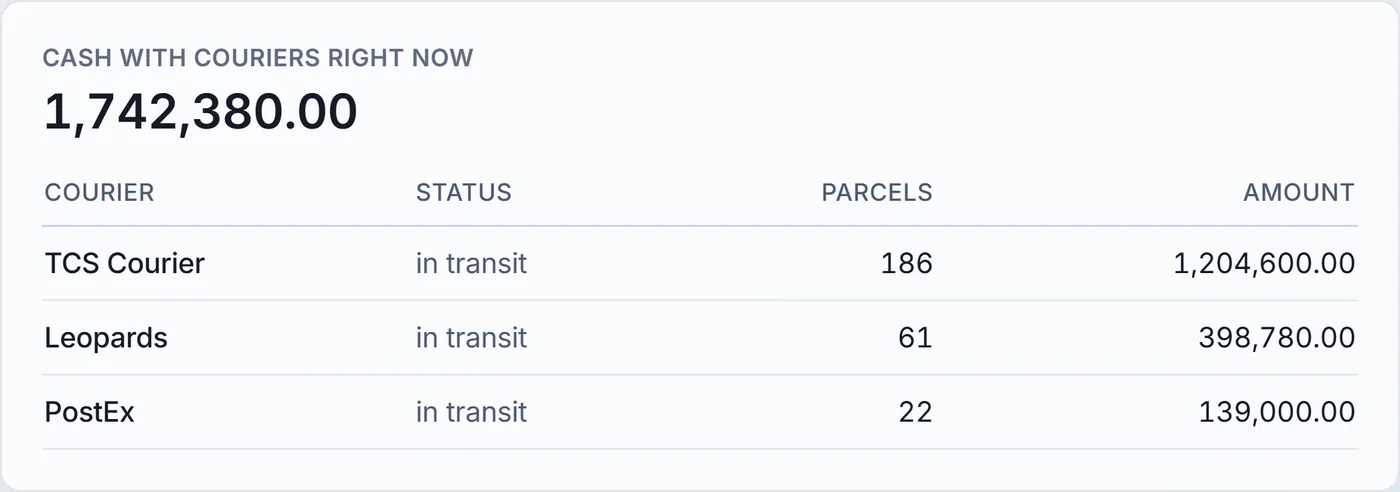
The demo store above has Rs 17,42,380 with three couriers: 186 parcels with TCS, 61 with Leopards and 22 with PostEx. Each settlement you post brings that figure down; each parcel delivered brings it up.
When less arrives than the parcels add up to
Do not let a short payment quietly disappear into the courier's balance. Keep the difference as its own line — a sum the courier owes you — with the list of parcels it belongs to. That list is what gets the money back.
Frequently asked questions
Do I need to check every parcel?
Yes, at least by matching tracking numbers automatically. A total that looks close can hide one parcel collected and not paid, and another paid twice.
What if a parcel on the sheet is not mine?
Ask the courier before you accept the payment. A wrong parcel usually means another merchant's money has landed in your settlement, or yours in theirs.
Should returned parcels appear on the settlement?
They usually do, with nothing collected and a charge against them, because the courier carried them both ways. Check that charge against your agreement.
How often should I reconcile?
Every time a courier pays. A payment checked the day it arrives is easy to query; one checked a month later is not.